If you've ever Googled "burnout recovery" and followed the advice - sleep more, take a vacation, practice self-care - and found yourself weeks or months later still feeling like you're running on fumes, I need you to hear something: it might not be burnout. At least, not the kind most people are talking about.
There's a version of burnout and fatigue that doesn't get discussed nearly enough, and it lives almost exclusively in the autistic experience. It looks similar on the surface, but underneath? It's a fundamentally different animal. And if you're autistic - professionally diagnosed or not - understanding the difference might be one of the most important things you ever learn about yourself.
I'm writing this from my oak grove in rural South Carolina, where I live off-grid on 35 acres of family land. I'm 45 years old, I've been a CTO, a vice president of operations, and an entrepreneur running multiple businesses for over two decades. I was diagnosed with autism in 2013. And I have spent a significant portion of my adult life in some stage of autistic burnout without knowing what it was.
This is what I've learned.
Burnout vs. Autistic Burnout: They're Not the Same Thing
Most people understand burnout as a stress-recovery imbalance. You worked too hard, you pushed too long, your body and mind need a break. Rest, recharge, come back. It's linear. It makes sense.
Autistic burnout shares some of that surface-level appearance, but it's built on a completely different foundation. It's not just about how hard you worked. It's about the invisible labor happening underneath every single interaction, every environment, every moment of your day.
Let me explain.
If you're autistic, your brain is doing things that neurotypical brains simply don't have to do. You're processing sensory input at a higher resolution - sounds, lights, textures, smells - all the time, whether you're conscious of it or not. You're running social translation software in real-time, converting neurotypical communication patterns into something your brain can parse and respond to appropriately. And on top of all that, most of us are masking - performing a carefully constructed version of ourselves that we've learned is more acceptable to the world around us.
That's not a bad day at the office. That's every day. Every interaction. Every grocery store trip, every phone call, every meeting. The cognitive overhead is enormous, and it's largely invisible - even to us.
So when the tank finally empties, it's not because you pulled a few too many late nights. It's because you've been running three operating systems simultaneously on hardware that was never designed for it, and the whole system has finally degraded past the point of function.
The Erosion You Don't See Coming
Here's the thing about autistic burnout that makes it so insidious: it doesn't announce itself. It's not like hitting a wall. It's erosion.
You don't notice the cliff edge getting closer until you're already over it.
For me, the first signal is what I call executive depletion. It's not just being tired or foggy - it's reaching a point where I genuinely don't feel comfortable making decisions anymore. I don't trust my own judgment. Things I would normally handle on autopilot suddenly require support, confirmation, a second opinion. It's not imposter syndrome. It's my brain telling me, in the only way it knows how, that the resources aren't there anymore.
And then everything starts to feel overwhelming. Not in the dramatic, anxiety-attack way people might imagine. More like a slow, creeping heaviness where every task, every email, every small decision carries a weight it shouldn't.
The physical exhaustion is incredible. And I mean that literally - it's not credible to people who haven't experienced it. How can you be this tired? You didn't even do anything today. But your nervous system did. Your sensory processing did. Your masking engine did. You've been running a marathon that nobody can see.
What Autistic Fatigue Actually Feels Like
I want to talk about this specifically because I think it gets lost in the clinical language.
Autistic fatigue feels like a really wet blanket wrapped around you.
Now, if you know anything about autism, you know that many of us love weighted blankets. The deep pressure is regulating. It's comforting. It's chosen.
This is not that.
This is the weight without the comfort. It's the stickiness, the heaviness, the dampness that just never goes away. It pulls your head down. It makes your shoulders droop. If you're introspectively aware - and many of us are, almost painfully so - you can feel it throughout your entire body. The gears aren't shifting right. Your digestive tract gets disrupted. You have brain fog so thick you can't think in straight lines. You're tired in a way that sleep doesn't fix, because the exhaustion isn't coming from a lack of sleep. It's coming from a system that's running in a degraded state across every subsystem simultaneously.
This isn't "I need a nap." This is "every part of me is underperforming and I don't know how to make it stop."
My Story: Burnout on Top of Burnout
I want to share two specific episodes from my life because I think they illustrate how autistic burnout operates differently - and how devastating it can be when you don't have the framework to understand it.
2009: The Divorce
In 2009, I went through a divorce. At the time, I was doing really well professionally. From the outside, things should have been fine - or at least manageable. People get divorced. It's hard. You recover.
But I didn't have my diagnosis yet. I didn't know I was autistic. I didn't understand that the emotional processing demands of a major life disruption, layered on top of decades of unrecognized masking and sensory management, would tank me in ways that went far beyond normal grief.
I didn't just feel sad or stressed. I felt fundamentally destabilized. My entire operating system - the carefully constructed social performance I'd been running for 30-plus years - was being questioned, and I had no idea why the recovery wasn't coming.
2014: The Collapse
By 2014, I was vice president of operations at a web development company. I was pulling 90-hour weeks. And I was one year post-diagnosis, but nowhere near understanding what that diagnosis actually meant for how I needed to live my life.
Here's the thing about 90-hour weeks when you're autistic: it's not just 90 hours of work. It's 90 hours of sustained masking. Of social performance. Of sensory processing in an office environment. Of executive function output at a level that would be demanding for anyone, but for an autistic brain is absolutely devastating over time.
I gave out. My body gave out. Health issues followed that took an extremely long time to recover from.
And what did I do? I immediately pivoted into starting my own business where I hired people - which is one of the most socially and executively demanding things a person can do.
Burnout on top of burnout.
I didn't rest. I didn't recover. I loaded the next massive demand onto an already empty system and wondered why I couldn't function. The body keeps the score, as they say, and mine was keeping a very detailed accounting.
Why "Just Rest More" Doesn't Work
This is probably the most important section of this entire piece, and I want to be direct about it.
When I've told people - doctors, friends, well-meaning advisors - that I'm burned out, the prescription is almost always some variation of: sleep more, take time off, rest.
And I understand why. For neurotypical burnout, that's often exactly the right advice.
But for autistic burnout, it misunderstands the problem at a fundamental level.
You can't sleep off a brain that won't stop processing. You can't rest when lying in bed means your mind is still running its monitoring loops, its analysis threads, its compliance checks. You're horizontal, but your system is still churning. That's not rest. That's just exhaustion with your eyes closed.
The standard burnout recovery advice was designed for brains that can actually downshift when the external demands stop. Autistic brains often can't. The internal demands - the sensory processing, the pattern recognition, the social replay and analysis - don't have an off switch. They run whether you're at work or in bed or on vacation.
So when someone tells you to "just rest" and you try and it doesn't work, please know: it's not a failure of willpower. It's a mismatch between the solution and the actual problem.
What Has Actually Helped Me
I want to be honest about what recovery has looked like for me, even the parts that are complicated.
Environment Engineering
The single biggest thing I did for my recovery was moving to the woods. I left suburban America and moved to 35 acres of ancestral family land in rural South Carolina, surrounded by documented oak trees dating back to the 1700s.
This wasn't just a lifestyle change. It was a neurological one.
The subtle noises of apartment living, of neighborhoods - the HVAC systems, the car doors, the distant conversations, the lawn mowers - those were killing me slowly. I didn't fully realize it until they were gone. Living off-grid gives me control over my environment in a way that nothing else has. When I do things, how I do them, what sounds surround me, what demands are placed on my senses - I control all of it.
And the nature exposure itself has been transformative. There's solid research behind this - natural environments reduce cognitive load in ways that built environments simply can't. Nature doesn't demand social processing. It doesn't require masking. The oak grove isn't asking anything of me. It's just there. For a brain that has spent 45 years fielding demands from every direction, that absence of demand is the closest thing to actual neurological rest I've found.
Being Honest About What Works
I'm going to be transparent about something, and I want to frame it carefully.
Certain hemp products have provided me with significant mental relief. Specifically, they help quiet what I call my "chief compliance officer" - that internal voice that has been monitoring, correcting, and enforcing neurotypical performance since I was a child. When that voice quiets down, I can actually rest. Not just physically, but neurologically.
I'm not prescribing this for anyone. I grew up in the "Just Say No" era, and I still carry some of that conditioning, if I'm being honest. Everyone's journey is different. Everyone's neurochemistry is different. What provides relief for one person might not work - or might not be appropriate - for another.
But I'd be dishonest if I left it out of this conversation. For me, it has been a significant part of finding relief. And I think the autistic community deserves honesty over comfort when it comes to these discussions.
Nature as Neurological Medicine
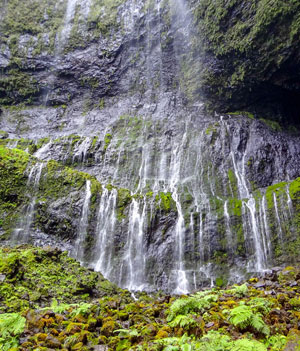
Beyond the environment itself, active nature exposure is probably my single most effective recovery tool. Being in the woods. Being in the oak grove. Being with my animals. If I'm not somewhere as beautiful as the forests of South Carolina, then somewhere like Hawaii - immersed in natural beauty with the volume of the world turned down.
This isn't woo. This is a brain that processes the world at high resolution finally being given input that doesn't hurt.
The Hard Truth About Recovery
I want to end with something that might be difficult to read, but I think it needs to be said.
Autistic burnout recovery is not linear. It's not predictable. And it may not be complete.
By the time you reach the point of executive depletion - where you can't trust your own decisions, where everything feels overwhelming, where the wet blanket is fully wrapped around you - the gas tank isn't just low. It's empty. And you didn't get there overnight. You crept your way in over months or years of accumulated demand, and you have to slowly ramp your way back out.
The problem is that it's incredibly easy to fall back into the pit when you're trying to climb out. One bad week, one unexpectedly demanding social situation, one period of poor sleep or high stress, and you can lose ground you spent months gaining.
Some burnout episodes have taken me years to recover from. And if I'm being completely honest, I don't know that you ever fully recover from the deepest ones. I think they change your baseline. They teach your nervous system something about its limits that doesn't fully un-learn.
The best way I can describe the whole arc is a plane slowly losing altitude.
You're flying along, and you don't notice the descent at first. The day-to-day masking, the sensory load, the executive overhead - it's all bleeding altitude so gradually that your instruments don't flag it. Then a big event hits - a divorce, a job collapse, a health crisis - and you drop a thousand feet in a second. You white-knuckle the controls, stabilize, keep flying. But you're lower now. And the next hit drops you further. And the next one further still.
Eventually, you have to land the plane. You don't choose to. The plane lands itself - or crashes, depending on how much runway you have left.
And here's the part nobody talks about: getting back in the cockpit is terrifying. The idea of taking off again, of climbing back to a cruising altitude you once maintained without thinking - it feels impossible. You know what it costs now. You know what the air feels like up there. You know how thin your margins were the whole time.
For me, the only thing that has ever gotten me back in that cockpit is a special interest. Not discipline. Not willpower. Not someone telling me to "get back out there." It's the thing my brain can't resist - the obsessive pull toward a project, a system, a problem that lights up every circuit I have. That's the ignition. That's what generates enough thrust to overcome the weight of everything I now know about what flying costs me.
It's not a sustainable recovery strategy. I know that. But it's an honest one.
That's not hopelessness. That's realism. And I think autistic people - especially autistic professionals, entrepreneurs, and leaders who are expected to perform at high levels indefinitely - deserve realism over platitudes.
If This Resonates With You
If you read this and something clicked - if you felt seen in a way that "regular" burnout advice never quite managed - I want you to know a few things:
You're not lazy. You're not weak. You're not failing at recovery because you're doing it wrong.
You're running a different operating system than the world was designed for, and you've been doing it without documentation, without support, and probably without even knowing it for most of your life. The fact that you're still here, still functioning, still trying - that's not nothing. That's extraordinary.
The Protocol: Be gentle with yourself. Engineer your environment where you can. Find the things that quiet your system - whatever those things are for you. And give yourself permission for recovery to take as long as it takes.