This week over on HawaiiGuide I published an essay called Hawai'i Doesn't Know You're on Vacation. It opens like this:
"Hawai'i doesn't know you're on vacation. The ocean doesn't know you saved for three years to stand beside it. The cliff doesn't know this is your only sunset. The summit doesn't know you have dinner reservations back at the resort. The islands are beautiful and they are indifferent, and holding both of those ideas at once is the whole point."
I want to talk about why that essay exists - because the reason belongs here, on the systems-and-AI side of my writing, as much as it belongs on the travel side.
Not a Theme Park
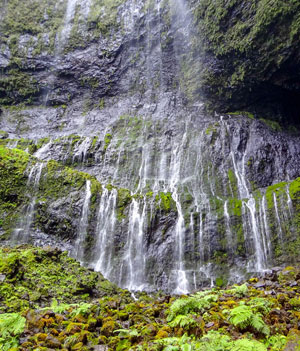
A theme park is engineered around the visitor. The dangerous machinery is hidden, the edge has a railing, and somebody has already decided whether the ride should run in today's conditions. Hawaii is the opposite arrangement: the islands are a living natural system, and the forces that make them beautiful are the same forces that make them unforgiving. The ocean built the beaches and keeps reshaping them. Rain carved the valleys and can turn a stream into a flood in minutes. Volcanoes built the summits that put a sea-level visitor into thin air before lunch.
You will feel that when you're there. That feeling - I've written about my own version of it on a bench at Waikamoi in 2002 - is exactly why people fall in love with the place. It deserves respect, not fear. Hawaii is not out to get you. It is also not arranged around you.
This isn't preaching. It's a tip from a quarter century of experience, including experience with my own bad judgment. In 2011 I followed a guide onto Kalepa Ridge on Kauai, felt in my gut that the ridgeline was beyond my comfort, and kept walking anyway - because the guide's confidence seemed like proof the risk was acceptable. It wasn't proof of anything. A guide's willingness to proceed doesn't replace your judgment, and you don't owe anybody the next step. It took me years to say that plainly, and it's in the essay now.
Why This Is an AI Story
Here's the part that belongs in The Logs. Safety information is the highest-stakes category of travel content there is - and it's precisely the category where generated answers are weakest.
A language model will cheerfully build you a Kauai itinerary that ends the Kalalau Trail hike with a swim at Hanakapiai Beach, because the internet is full of pages describing how beautiful Hanakapiai is. The Hawaii Division of State Parks says swimming there is not recommended, the rip currents can be extremely treacherous, there is no lifeguard, and drownings occur regularly. That fact pattern lives in warning signs, agency guidance, and the accumulated judgment of people who keep going back - not in the average of the web's vacation content, which is what a generated itinerary is.
And safety is a today problem, not a training-data problem. The beach that worked yesterday may be the wrong beach today. Rain falling miles upstream changes the waterfall you're standing under. Vog drifts into a district that was clear this morning. No pre-generated answer can know any of that, which is why HawaiiGuide's safety layer is built on live data: the ocean and surf report, the trail and road status, the jellyfish calendar, volcano and air-quality updates, and opt-in alerts. It's also why we built the Itinerary Checker - bring the plan your chatbot wrote, and we'll check it against grounded evidence, reservation rules, real drive times, and yes, the beaches you shouldn't swim at.
This is what I mean when I say trust is the scarce asset in the age of AI. On most topics, a wrong generated answer wastes your time. On this topic, it can end your trip or worse. A resource with a named human behind it - one who has hiked the trail, misjudged a ridgeline, watched the surf close a beach, and answers publicly for errors - is not a nostalgic nice-to-have. For safety guidance, accountability is the product.
The Tip, Plainly
The essay's practical advice is deliberately unglamorous, most of it drawn from the people whose job this is - Hawaii's Ocean Safety program, the Division of State Parks, the National Park Service, the Department of Health: swim near a lifeguard and obey every posted sign. Never let a dozen people in the water make the decision for you; they can all be misreading the same ocean. Don't pair a morning dive with an afternoon summit. Give children a designated water watcher whose only job is watching. Keep room between your body and the edge, because a camera narrows your attention at exactly the wrong moment. And treat your instincts as a veto, not a safety system - feeling wrong is enough reason to stop, but feeling comfortable proves nothing.
"A good Hawai'i day can survive the word no."
Hawaii is a raw place built by raw forces. You will feel that. You should respect that. And in an era where anyone can generate confident-sounding travel advice in four seconds, knowing who is telling you where not to swim - and why they're in a position to know - has never mattered more. 🤙